
How to remove stains from a sofa: a guide by stain and fabric
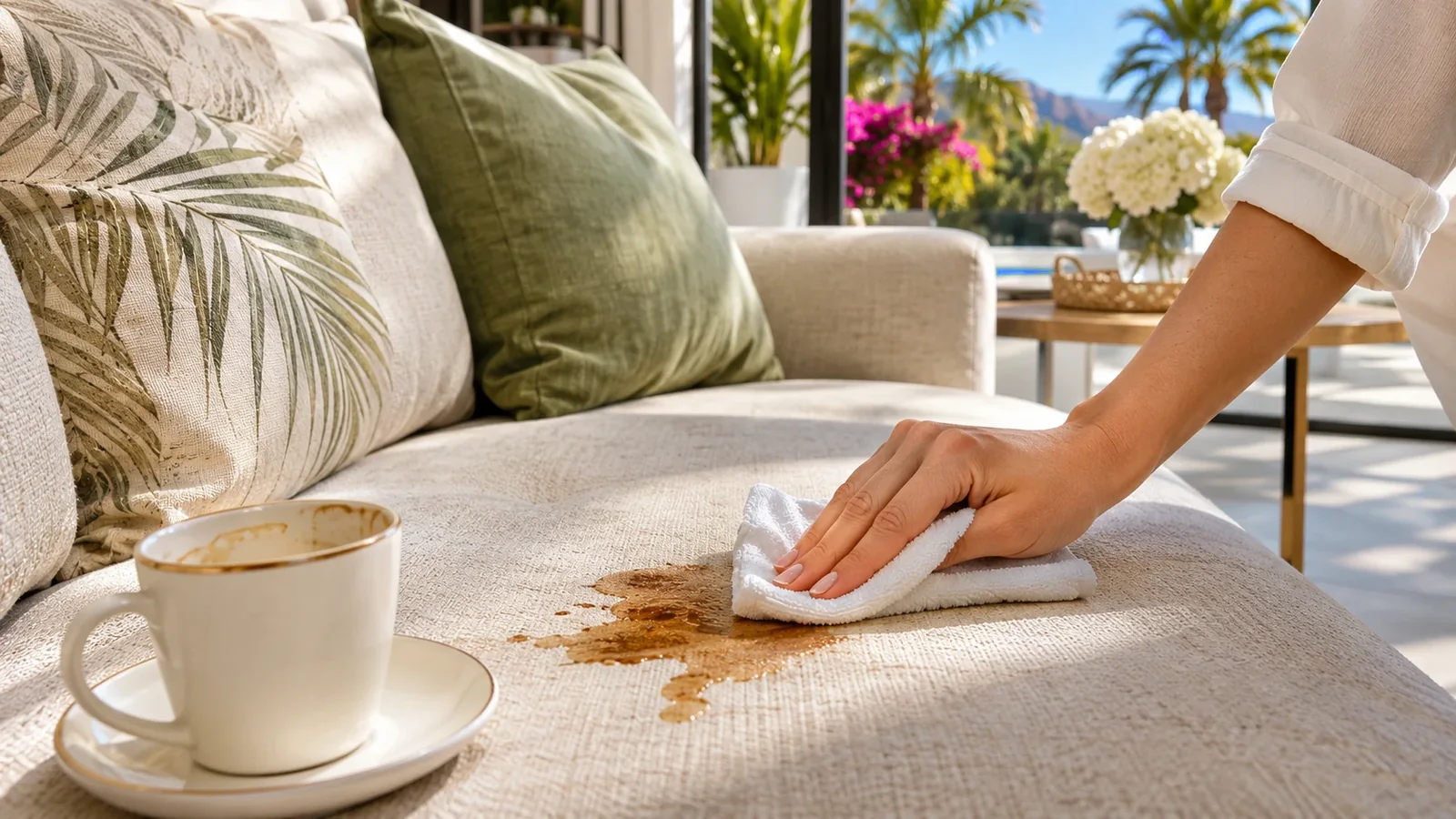
A stain on the sofa is rarely a disaster if you act quickly and use the right product. The most common mistake is to rub with whatever is at hand: the stain spreads, the fibre opens up and you end up with a ring bigger than the original mark. This guide explains how to remove the most common stains depending on the fabric.
4 rules before you touch the stain
- Check the care label. W = water-based cleaners; S = solvent/dry cleaning only; W/S = both; X = vacuum only. More on this in how to clean a fabric sofa.
- Blot, don't rub. Press with kitchen paper or a white cloth, working from the outside in.
- Test on a hidden area. Any product, even vinegar, can discolour some fabrics.
- Use little liquid. If water reaches the padding, dirt wicks up as it dries and leaves a yellow ring.
Removing stains from a fabric sofa
- Coffee, tea and wine: blot, apply lukewarm water with a tablespoon of white vinegar per glass and dab dry. On red wine, fine salt on the damp stain helps absorb it.
- Grease and oil: sprinkle cornflour or bicarbonate of soda, leave 20–30 minutes, vacuum and clean with water and a few drops of washing-up liquid.
- Blood: always cold water. Hot water sets the protein. If it stays, a little hydrogen peroxide on light fabrics only, after testing.
- Ballpoint ink: isopropyl alcohol on a cotton bud, dabbing and changing the bud as soon as it picks up colour.
- Chocolate and food: lift the residue with a spoon, let it dry if sticky, then treat the greasy part as above.
- Pet urine: needs its own treatment — see how to get urine smell out of a sofa.
Leather and faux leather sofas
Leather should not get wet. Use a barely damp cloth with mild soap, dry straight away and then apply a leather conditioner. Grease can be drawn out with talc or cornflour left for several hours. On faux leather, soapy water is fine; avoid alcohol and solvents, which crack the top layer.
Old stains and water rings
Stains that are months old usually sit in the padding, not just on the surface, which is why they come back as the fabric dries. What works here is hot-water extraction: the machine sprays water with cleaner into the fabric and sucks it straight back out with the dirt, without soaking the padding.
What never to use
- Bleach or bathroom cleaners: they discolour and weaken the fibre.
- Mixing products (bleach with vinegar or ammonia): it releases toxic gas.
- A hot hairdryer: it sets the stain and leaves a ring.
- Stiff brushes on velvet or chenille: they flatten the pile.
When to call a professional
If the stain is old, large, of unknown origin or the fabric is delicate (velvet, linen, silk), a professional clean costs less than a ruined cover. At Limza we offer sofa and mattress cleaning at home in Marbella, Estepona, Fuengirola and Mijas, from €45 per item (see prices). If your rugs are stained too, add rug cleaning to the same visit.
Frequently asked questions
Does vinegar remove sofa stains?
Yes — on water-safe fabrics, diluted white vinegar helps with coffee, wine and odours. Don't use it on leather or without testing on a hidden spot first.
How do I clean a sofa stain without leaving a water mark?
Use little liquid, work from the outside in and finish by lightly dampening the whole panel up to the seams so it dries evenly.
Can stains that are years old be removed?
Many can, with hot-water extraction, because the dirt is in the padding. Some marks, such as bleach spots, are discolouration and cannot be reversed.
How long does a sofa take to dry after professional cleaning?
Usually 4 to 8 hours, depending on the fabric, temperature and ventilation.